-
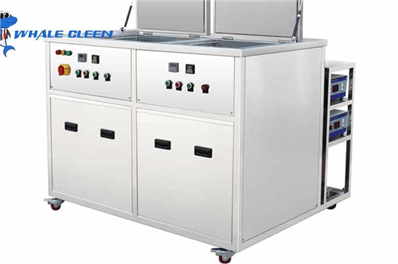 Stuck with Grinding Dust Embedded in Batch Workpiece Crevices? Manual Cleaning Is Draining Your Labor Budget and Driving Production Costs Through the Roof
Walk into any metalworking shop, stamping plant, or machining facility, and you will see the same scene repeated shift after shift: workers hunched over parts bins, scrubbing with brushes, picking at crevices with picks, blowing compressed air into blind
-
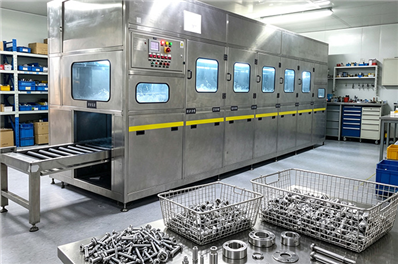 Ultrasonic vs. Electrolytic Ultrasonic Cleaning: What's the Real Difference in Metal Finishing Cleanliness?
In metal finishing and electroplating operations, cleanliness is not just a quality metric—it is the foundation upon which adhesion, corrosion resistance, and final product performance are built. A single speck of oil residue on a stamped metal part can c
-
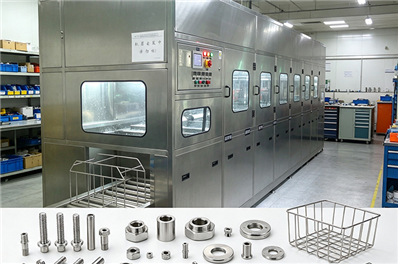 Ultrasonic Cleaning Machine: Why Disassemble Molds When You Can Clean Carbon Deposits in Minutes?
In industrial manufacturing, few maintenance tasks are as time-consuming and costly as mold cleaning. Production managers know the drill all too well: shutdown the line, wait for the mold to cool, disassemble every component, scrub stubborn carbon deposit
-
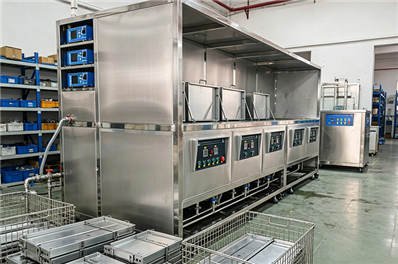 Ultrasonic Cleaning Machine: The Only Way to Eliminate Cutting Oil Sludge from Deep Grooves and Restore Plating Adhesion
For metal finishing shops and precision component manufacturers, few quality failures are as financially devastating as plating rejection caused by inadequate pre-cleaning.The scenario is painfully familiar. A batch of precision-machined components—hydrau
-
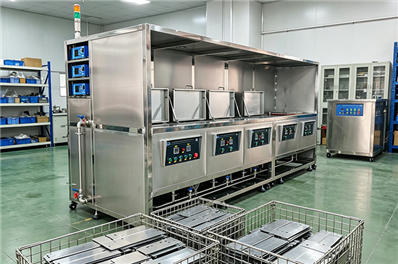 Ultrasonic Cleaning Machine: Breaking the Production Bottleneck When Piles of Oily, Chip-Covered Parts Stall Your Shop Floor
Walk into almost any machining workshop, and you will see the same scene: pallets stacked high with freshly machined parts, their surfaces glistening with cutting oil and clinging to metal chips, grinding dust, and microscopic debris. The parts are ready
-
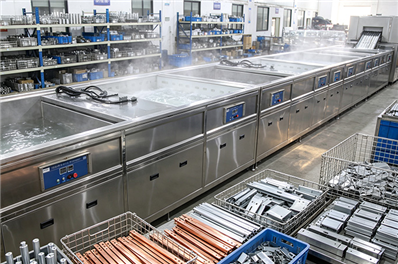 How to Select an Ultrasonic Cleaning Machine for Engine Cylinder Blocks
In heavy-duty equipment repair and engine remanufacturing, the cleaning of cylinder blocks is a critical and demanding task. These large, complex cast-iron or steel components contain intricate networks of oil galleries, water jackets, blind holes, and pr
-
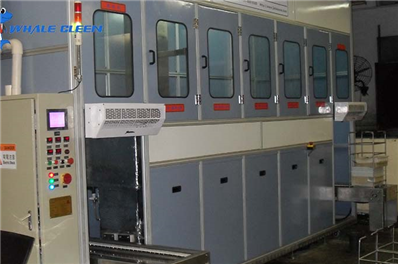 20+ Years Deep in Industrial Cleaning: Specializing in Non‑Standard Customization to Conquer the “Last Mile” of High‑Difficulty Cleaning for Thousands of Manufacturers
The “Last Mile” Problem in Industrial CleaningIn manufacturing, the last mile is often the hardest. You can have a world‑class production line, precision CNC machining, and rigorous quality control—but if a single component carries microscopic contaminati
-
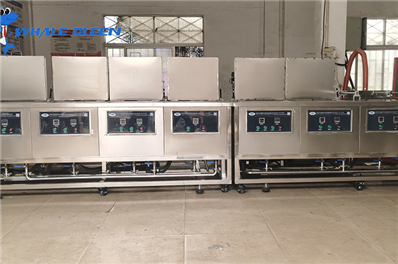 What Type of Ultrasonic Cleaning Machine Is Best? A Professional Perspective
Ultrasonic cleaning machines are versatile tools that leverage high-frequency sound waves to create cavitation bubbles, which effectively remove contaminants from surfaces. These machines are widely used across various industries due to their precision, e
-
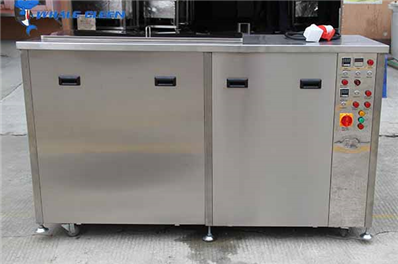 Main application and matters of single tank ultrasonic cleaning machine
Whale Cleen single tank ultrasonic cleaning machine has many specifications, which can provide custom services according to customer requirements. Main application: Ultrasonic cleaning machine is suitable for cleaning work in various industries. For examp
-
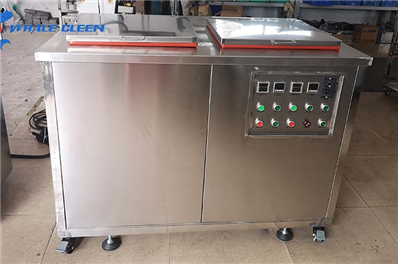 Ultrasonic Cleaning Machine for Batch Sensor Housings: How Whale cleen Prevents Scratches
Batch cleaning sensor housings is one of the most demanding tasks in precision manufacturing. These components often feature machined surfaces, threaded ports, blind holes, and tight tolerances. Contaminants such as cutting oil, metal fines, polishing res
-
Ultrasonic Cleaning Machine: Solving the Micro-Hole Contamination Challenge in Sensor Housings
In automotive, aerospace, industrial automation, and electronics manufacturing, sensor housings are everywhere. These components often feature micro-holes, blind holes, internal channels, and threaded ports. During machining, stamping, molding, or assembl
-
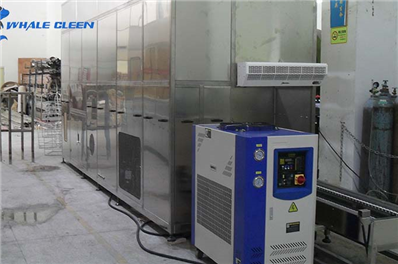 How to Remove Grinding Dust from Blind Holes and Gaps: Industrial Ultrasonic Cleaning Practical Guide
Grinding, deburring, and polishing operations leave fine dust that is easy to see on open surfaces and almost impossible to remove from blind holes and narrow gaps. Compressed air blows some dust out but pushes the rest deeper. Brushes cannot reach the bo